
Dave Clark | July 24, 2026 | CWC Blog
NEED WEBINAR HELP?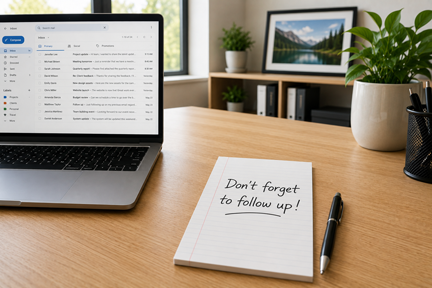
I frequently find myself bemused at how often webinar organizers neglect one of the most important parts of the webinar production timeline. They put great effort into promotion, content, and live execution. But then after the webinar is over they fail to follow up with registrants and attendees.
After a webinar is over, follow-up is critically important. If you've conducted a marketing webinar, it's crucial to follow up with a call to action. If you've provided some kind of informational or educational webinar, it's important to follow up with appropriate next steps. And no matter what kind of webinar you've offered, it's vital that you provide registrants and attendees with a link to a recording of your webinar after it's over.
Below is a breakdown of the five most common reasons to follow up after a webinar and why it's important that you never fail to follow through with a follow-up.
1. Following Up with a Call to Action
For sales and marketing webinars, following up after a webinar is non-negotiable. Not doing so practically defeats the whole purpose of conducting the webinar in the first place. Yet I'm constantly amazed at how many webinar organizers seem to disappear at the conclusion of a webinar. They thank the audience for attending, and then the audience never hears from them again.
Needless to say, the whole point of a marketing webinar is to sell something. But ideally, the selling shouldn't happen during the webinar, at least not overtly. The proven method that companies have been using for years is to offer something of value during a webinar—some kind of education or industry knowledge relevant to your prospective customers—and in the process subtly introduce them to or remind them of whatever it is you want them to buy. People attend webinars when they're offered something of value; they don't attend webinars promoted as blatant sales pitches.
At the conclusion of your webinar, during which you provided your audience with useful information, established yourself as an authority in your field, and very subtly promoted your product or service, some kind of follow-up is required to actually close the deal. Usually, this is a simple follow-up email with a clear call to action. Sometimes, especially with larger companies, it's a phone call from the sales team to any attendees who might have qualified themselves as particularly hot leads.
There are many reasons why companies fail to follow up after a webinar. Sometimes the person or team producing the webinar neglects to pass attendee and engagement data on to the sales team. Sometimes the sales team is too busy with other things and they never reach out to attendees in a timely manner or at all. And sometimes the webinar producer never even bothers to notify sales staff that a webinar has been scheduled in the first place.
For a sales or marketing webinar to be successful, prompt follow-up is always necessary—starting with a standard post-webinar follow-up email and ideally extending to a one-on-one call with qualified leads. Without it, you're seriously undermining the effectiveness of your webinar and leaving countless opportunities on the table.
2. Following Up with Next Steps
Many webinars are conducted for reasons other than marketing and sales. Companies conduct webinars to update investors on earnings; nonprofits run webinars to keep stakeholders current on programs and activities; associations offer webinars on topics of interest to members. Whatever the purpose or objective, these types of webinars require prompt follow-up too.
Although perhaps less urgent than a sales webinar, following up after informational and educational webinars is necessary to provide attendees with whatever additional information you want them to have or links to whatever next steps you want them to take.
Providing detailed information during a live webinar itself is never easy or practical. You can't expect attendees to absorb or record large amounts of data or information during a live event. And it's usually not a good idea to provide attendees with links to external resources, taking them away from the live presentation.
Let attendees know during the webinar that they can relax and enjoy the presentation. After the webinar, they'll receive attachments or links to any relevant supporting information or next steps. A follow-up email after the webinar is an easy and effective way to communicate this important information.
3. Following Up with the Webinar Recording
It's number three on my list, but this item is arguably the #1 overall reason to follow up with registrants and attendees after a webinar. No matter what kind of a webinar you're offering, no matter what other kind of follow-up you do, providing registrants and attendees with a link to a recording of the webinar is a must. And they expect you to do it.
Many webinar hosts don't realize that about 50 to 60 percent of registrants never show up for a live webinar. They either forget or change their mind or lose their join link. But, most often, they never plan on attending in the first place. It's not that they aren't interested in your content. After all, they did register. It's just that they expect that you'll send them a link to the recording after the webinar is over.
If you're not sending a recording link to all of your registrants and attendees—so that attendees can rewatch the webinar if they want to and registrants can watch what they registered for but never showed up to—you're losing an opportunity to reach over half of the people who expressed interest in your content. No matter what else you do, always follow up with a simple email thanking people for registering and providing them with a link to the recording.
4. Following Up with a Survey
There's no question that it's crucial to follow up a webinar with a call to action or next steps, and to send out a recording link, but there are a few other ways that a webinar follow-up can produce positive results.
Many webinar organizers overlook the advantages of sending attendees a post-webinar satisfaction survey. I almost always encourage this with my clients. Receiving real feedback on what attendees liked about your webinar, what they didn't like, and what they might like to hear about in the future allows you to improve and optimize an ongoing webinar program.
I usually use a standard webinar survey for my clients that asks attendees to rate how satisfied they were with the webinar topic, content, and presenters, whether they would attend another webinar hosted by the same organization, and what topics they would like to be offered in the future.
There are plenty of affordable subscription-based survey platforms to choose from. Or, you can create your own simple survey using something like Google Forms. Since you'll already be sending out a follow-up email containing a link to the webinar recording, it's easy enough to include a link to the survey as well.
5. Following Up with a Certificate
This is the least common reason to follow up after a webinar. But for certain types of webinars, it's an important final step. Many webinar hosts like to offer their attendees a special completion or participation certificate for attending their webinar. This is very common with webinars that offer continuing education credits and webinar classes and courses. It's a nice little incentive that a webinar organizer can offer to participants and it gives attendees a way to display the accomplishment of completing a course or participating in a training.
Granted, the actual creation and distribution of certificates to attendees can be a difficult and time-consuming process. If they're good with design, a webinar host might choose to create a custom certificate with each attendee's name and email each one as a PDF attachment to each attendee. Needless to say, this would be a tedious job, especially for hosts conducting multiple ongoing webinars.
Another option is to use a third-party certificate generator, which often allows you to upload a list of attendee names and emails and then sends each custom certificate to each person on the list. The problem with this approach is that the webinar attendee lists downloaded from most webinar platforms are notoriously messy. Attendees regularly register for or join webinars with mistyped names or sometimes even with auto-generated system names. This results in a bunch of certificates with improperly formatted and displayed attendee names that the recipients have no way of fixing.
To solve some of these problems, Clark Webinar Consulting developed an easy-to-use certificate maker that enables webinar organizers to choose from a variety of professional certificate layouts, customize certificates with their own text and branding, and then share a single secure link with all certificate recipients. The beauty of this method is that each recipient can personalize their certificate—with the preferred spelling of their name!—and then print or save as a PDF.
EZ Certificate Maker was built primarily with webinar hosts in mind, but it can be used by just about anyone who needs to create custom certificates for any occasion. The tool is available to try for free at EZ-Certificate-Maker.com.
Clark Webinar Consulting provides expert webinar production, consulting, and support services to help businesses, nonprofits, and individuals run successful webinars and virtual events. For over 10 years, we've helped hundreds of organizations conduct thousands of stress-free, professional webinars. Learn more about our full range of webinar services.

